

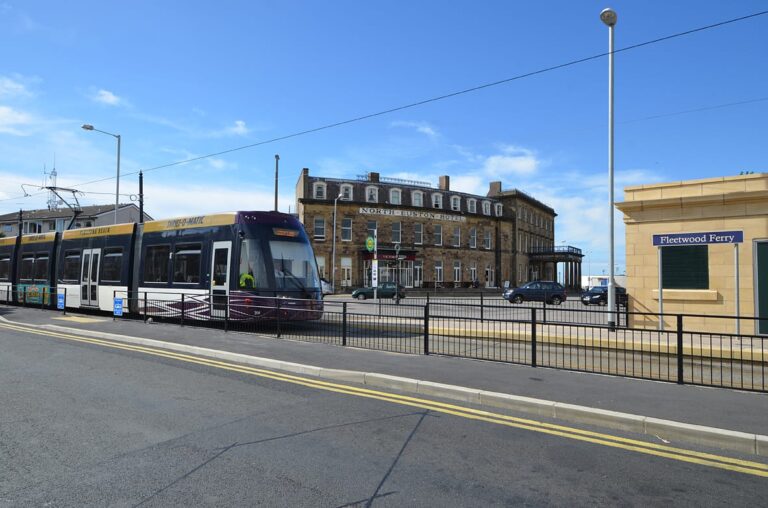
Electric trams in Fleetwood have been part of everyday life since the line was first laid in the late 1890’s. For well over 100 years they’ve carried tourists and locals from Fleetwood to Cleveleys and Blackpool. Services began on 14 July 1898.
Operated by Blackpool Transport, the tramway runs along the Fylde Coast from the sheds in South Blackpool at Squires Gate, through Cleveleys to Fleetwood. You’ll see two different styles of tram – the modern, purple Bombardier trams and the old Heritage ones.
Route of the Trams in Fleetwood
Most of the Blackpool to Fleetwood tramway is against the coastline. At Anchorsholme it parts from the seafront to go through the centre of Cleveleys, continuing inland to Fleetwood. It briefly meets the seafront again in Fleetwood near to the North Euston Hotel and RNLI station against Fleetwood Ferry.
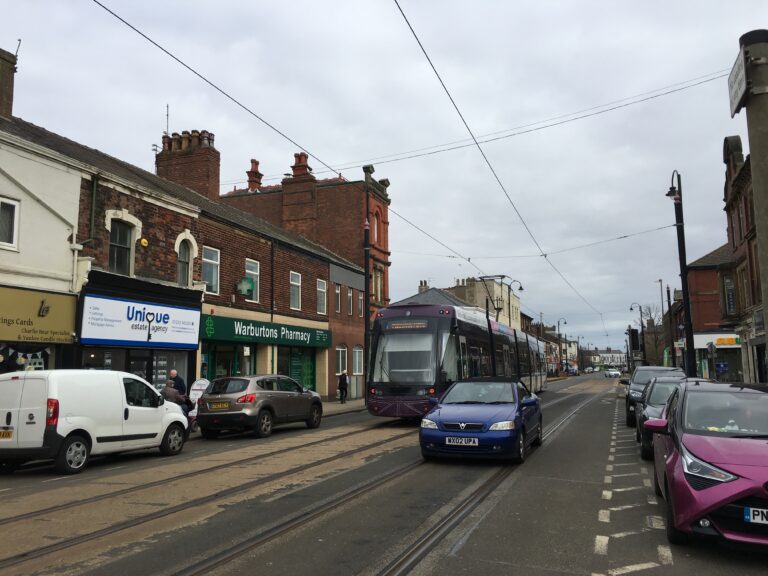
The tramline runs along Lord Street at Fleetwood. There are stops on Lord Street and at Fleetwood market, so it’s an ideal way to travel in and out of Fleetwood. You can catch a tram about every 20 minutes during the day.
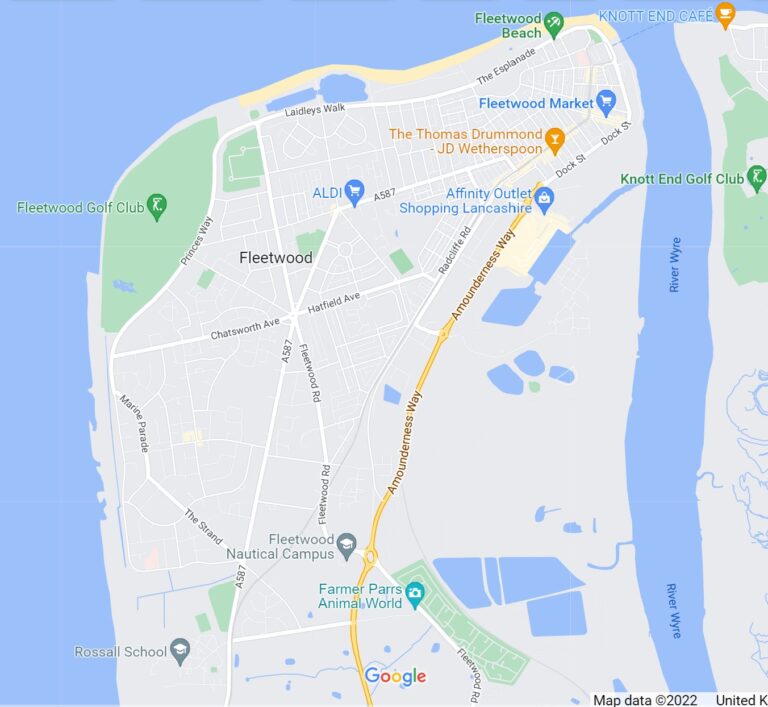
Fleetwood is the end of the line in the North. Trams travel to the tip of Fleetwood in a line parallel to the A585. You can just see the pale grey line in the next map with the loop just under the words ‘Knott End Cafe’. Click on the map to explore.
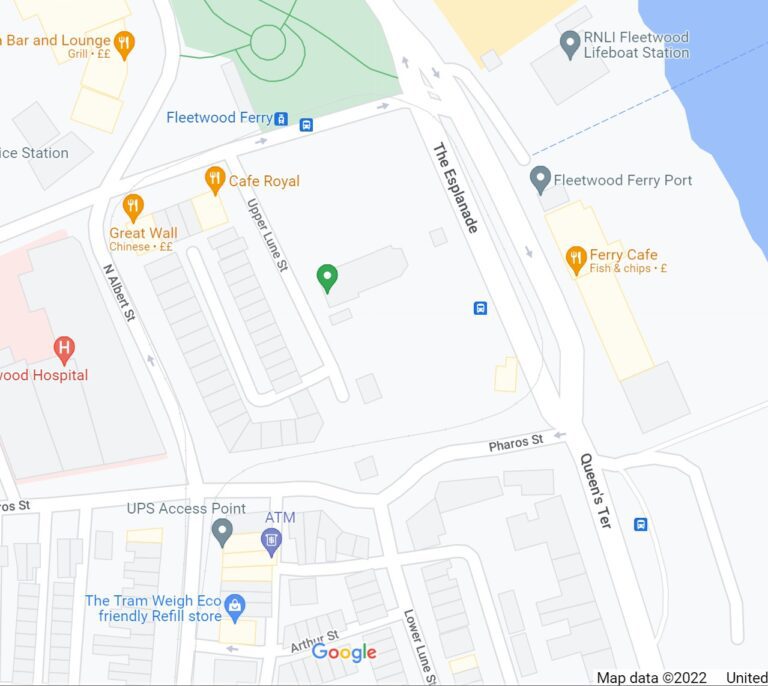
At the end of the peninsula of land, the line loops from North Albert Street, along Bold Street to The Ferry and along The Esplanade. Trams then run back along Pharos Street past the Upper Lighthouse, to rejoin North Albert Street and continue their journey back again.
Did you know? For many years Fleetwood was the only town centre in Britain with trams running the full length of its main street, sharing road-space with cars. It’s still the only genuine Main Street tramway with continuous running on the original Victorian route.
FREE Newsletter
FREE Newsletter

A New Tramway for Fleetwood
The 100+ year old tramway has seen the Fylde Coast change, grow and evolve into the place it is today. William Read posed a very good question (below). Do you know the reason why this tramway survived? Leave your own comment at the foot of the article!
I have never been to Fleetwood, and was unaware of the tram system there. I’m fascinated by the fact that when the rest of England’s tram systems were demolished/closed in the 1920s and 1930s, your town maintained its system. What the unique circumstances were that allowed this to happen? Whilst trams were taken out everywhere else, only to reappear decades later in Manchester, Nottingham, Croydon etc?
William Read
3 April 2012 was the day when the brand new Flexcity Bombardier trams made their very first passenger journey. It marked the start of a brand new era of passenger transport for residents and visitors.

With steep steps up to the old tram cars, they didn’t comply with modern access rules for disabled passengers. If the system hadn’t changed and adapted the service would ultimately have had to cease.
So the huge project to modernise the tram way for the twenty first century began. £100m of investment followed, with new tracks and platforms and a completely new system to see the tramway into the future.
Heritage Trams in Fleetwood
The old fashioned Heritage Trams are immensely popular. Their distinctive clickety-clack is part of the Blackpool seaside experience!
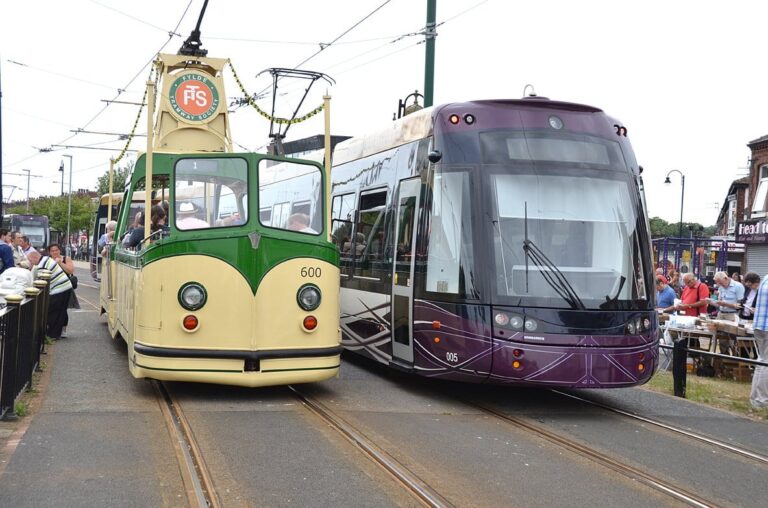
The Heritage Trams are an attraction in their own right. See the sights in style and enjoy a journey along the coastline by Heritage Tram Tour. It’s a great way to see the Fylde Coast and brilliant value for money.
Tram Sunday
Tram Sunday is a huge event which takes place all over the town each summer. It’s official name is Fleetwood Festival of Transport.

Trams feature prominently in this event, with special services carrying passengers to Fisherman’s Walk. A selection of heritage trams is always on display each year too.
History of Trams in Fleetwood
Today, you’d probably most associate the tramway with Blackpool. The Fleetwood and Blackpool systems were originally operated by different companies. The two separate systems came together after The Blackpool and Fleetwood Tramroad Act was passed in May 1896.
On 1 July 1898 The Blackpool and Fleetwood Tramroad Company ran their first tram from Blackpool to Fleetwood. The private company, a direct rival to the Corporation Tramway, began regular services from 14 July.
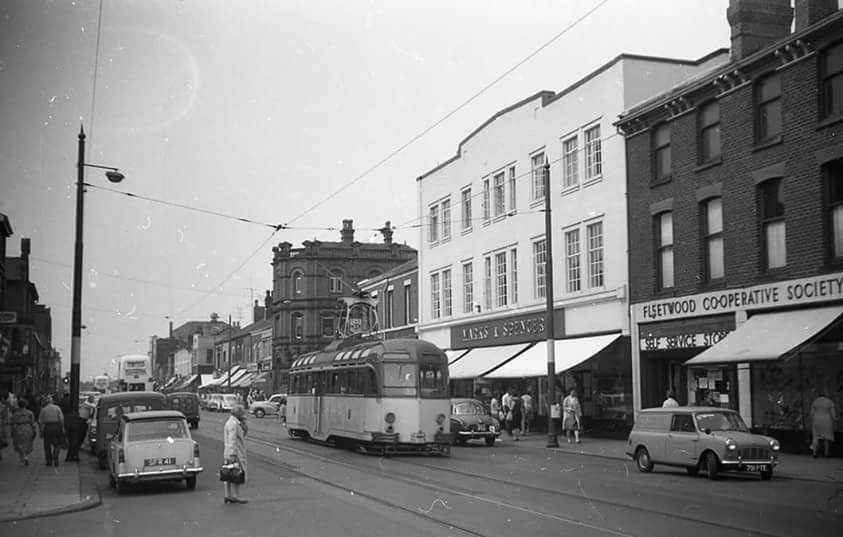
Dock Street was, understandably, the busiest place in the town before the arrival of the tramway. But with the new tracks routed along East Street and West Street (now Lord Street and North Albert Street) commercial trade followed. The town centre grew and Fleetwood developed into a busy seaside port town.
The Fleetwood tramway also used overhead electric cables. A vast improvement on the conduit power supply first used down the line in Blackpool. A groove in the track provided the power supply and it soon clogged up with sand and water. The Blackpool tramway soon replaced their unreliable system with the efficient overhead Fleetwood method.
Blackpool Corporation took over The Blackpool and Fleetwood Tramroad Company on 1 January 1920. The original Gynn Inn was closed, demolished and the promenade redesigned so the two tramways could be joined.
Tram Depots
Built in 1897, Copse Road Depot was originally a store and service depot. The depot was a hive of activity, with six tracks entering it and storage space for 18 trams.
In 1920 Copse Road passed to Blackpool Corporation Tramways and was used to dismantle trams. A line connected the depot with the railway between 1925 and 1949, used to shunt wagons. Blackpool Corporation later sold the depot so then Fleetwood Car Centre used it as a car showroom. A scheme to convert the building into a tram museum failed, because of the poor condition of the building.
With the depot demolished in 2016, the space is now used as a Wyre Council depot.
Bold Street Depot opened in January 1899, with two tracks and a capacity of 4 trams.
This depot was only used by the first two and last two trams each day. This depot also closed in 1920 when Blackpool Corporation took over the tramroad. When the Fleetwood loop was built in 1924 the wires were taken down. After World War II the depot was used by Fisherman’s Friend, but demolished in 1973 to make way for flats.
Tram Museums
There have been various plans for tramway museums in Fleetwood, explored over the years but without any success.
The original tram sheds at Copse Road were the first proposed location. That plan was abandoned, presumably due to the condition of the buildings.
Then back in 2016, land at the Wyre Dock was identified as another possible site. The new, all-year round visitor attraction was to include leisure and commercial development. You’ll have realised that this plan was also shelved!
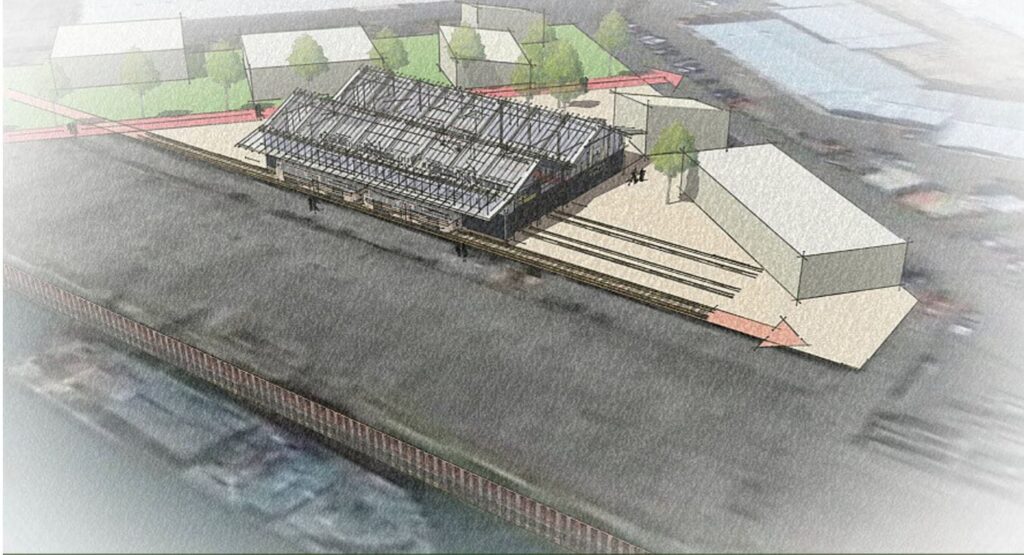
The outline proposal included displaying the Fleetwood Heritage Leisure Trust trams, vehicles and artefacts from other locally based groups. Plus a skills training workshop and a significant commercial scheme which could have extended to a tropical, year-round botanic display.

Dutch structural design company, Smiemans, which specialises in large ‘glass houses’, worked with FHLT on the development. The company previously worked with the Royal Horticultural Society to design their principal enclosure at Wisley, as well as other UK and European clients.
Sadly, in the summer of 2022, without an available development site, the collection of trams was finally put up for sale.
While you’re here…
What do you think? Why don’t you join in and leave a comment below?
Have a look at the homepage of the Visit Fleetwood website for more of the latest updates.
Love the Fylde Coast? Sign up for your weekly email newsletter. Packed full of interesting things, it arrives in your inbox all 52 weeks of the year.
Join us on Facebook at our Visit Fylde Coast Facebook Group and follow us on Twitter @visitFyldeCoast
Plus hundreds of videos to watch on our YouTube channel – from all over the Fylde Coast!
We Need Your Help
We Need Your Help



I have never been to Fleetwood, and was unaware of the tram system there. I am fascinated by the fact that when the rest of England’s tram systems were demolished/closed in the 1920s and 1930s, your town maintained its system. I wonder what the unique circumstances were that allowed this to happen, whilst trams were taken out everywhere else, only to re-appear decades later in Manchester, Nottingham, Croydon etc?