

You’ll find Memorial Park in a triangle bounded by Park Avenue, Wellbeck Avenue and Poulton Road, near to Fleetwood Town Football Club. The postcode is FY7 6TU.
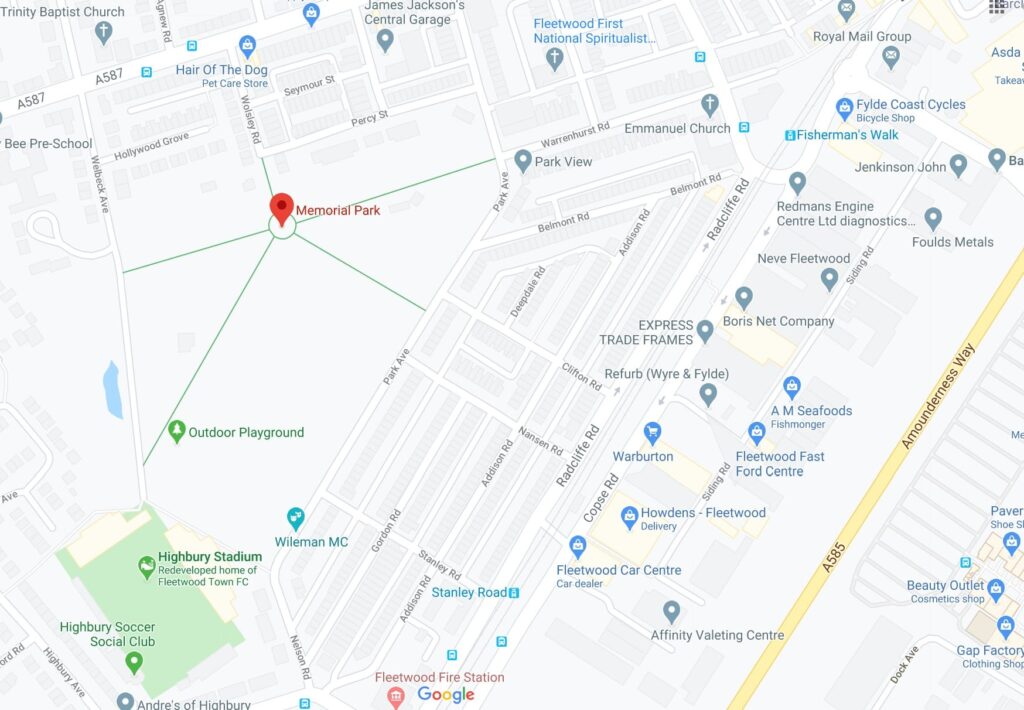
Memorial Park in Fleetwood was named in 1917 in memory to those who died in World War One. The memorial statue was added just a few years later, along with trees planted by the children who lost relatives.
It’s a valuable asset to the community of Fleetwood, with things to do for people of all ages. There’s three Crown Green Bowling Greens, a children’s play area and picnic area, duck pond, football pitches and tennis courts.
Look Around Memorial Park
We went along to take a look around in July 2020. What a glorious park it is. Come and take a look –

Enjoyed this video? Why don’t you subscribe to the Visit Fylde Coast YouTube channel, for loads more great content!
Main Entrance Gates
The main entrance is off Warrenhurst Road. Restoration to the original 1920s design was ready in time for Remembrance Sunday in 2014.
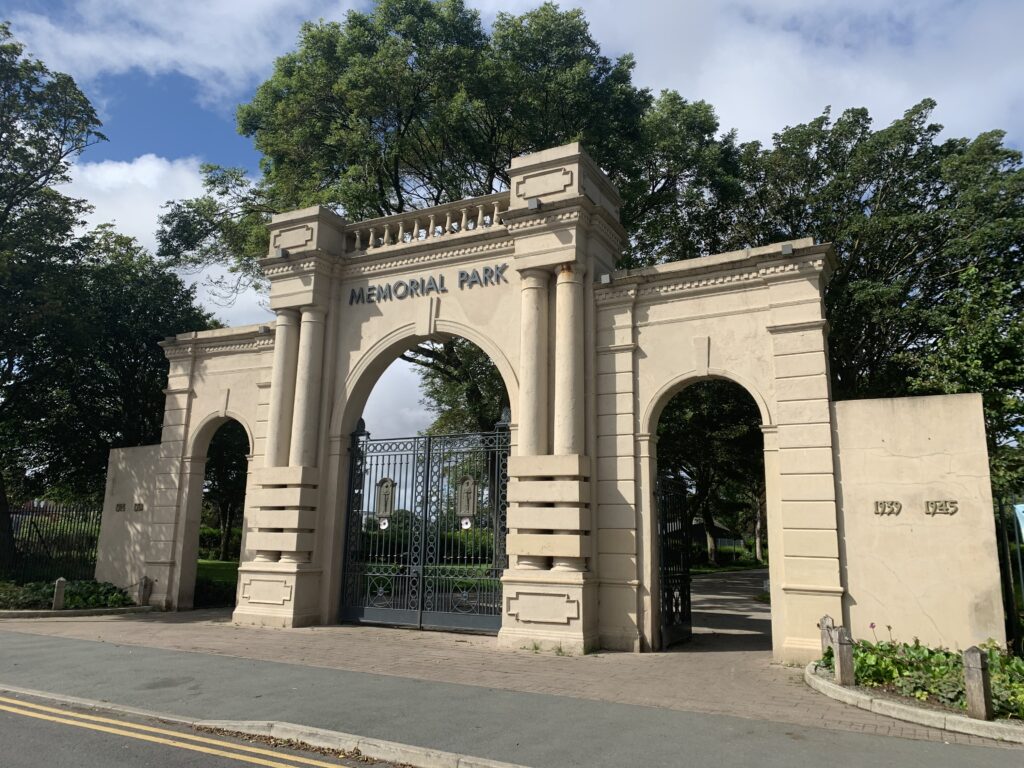
Previously, the impressive gateway was showing its age. It had been decorated inappropriately over the years, and was showing wear.
FREE Newsletter
FREE Newsletter


Remembrance Avenue
Through the gates, Remembrance Avenue leads to the war memorial in the centre of the park.
Mature sycamore trees line Remembrance Avenue, planted by children who lost their fathers in the First World War.

The War Memorial
The war memorial bears the names of 329 local men killed in conflict.
Painstakingly cleaned and repointed, the concrete steps and planters have also been repaired.

Rose Garden
The Friends of Memorial Park, were delighted to complete restoration of the rose garden in 2011. They worked closely with Wyre Council for two years to bring this plan to life.
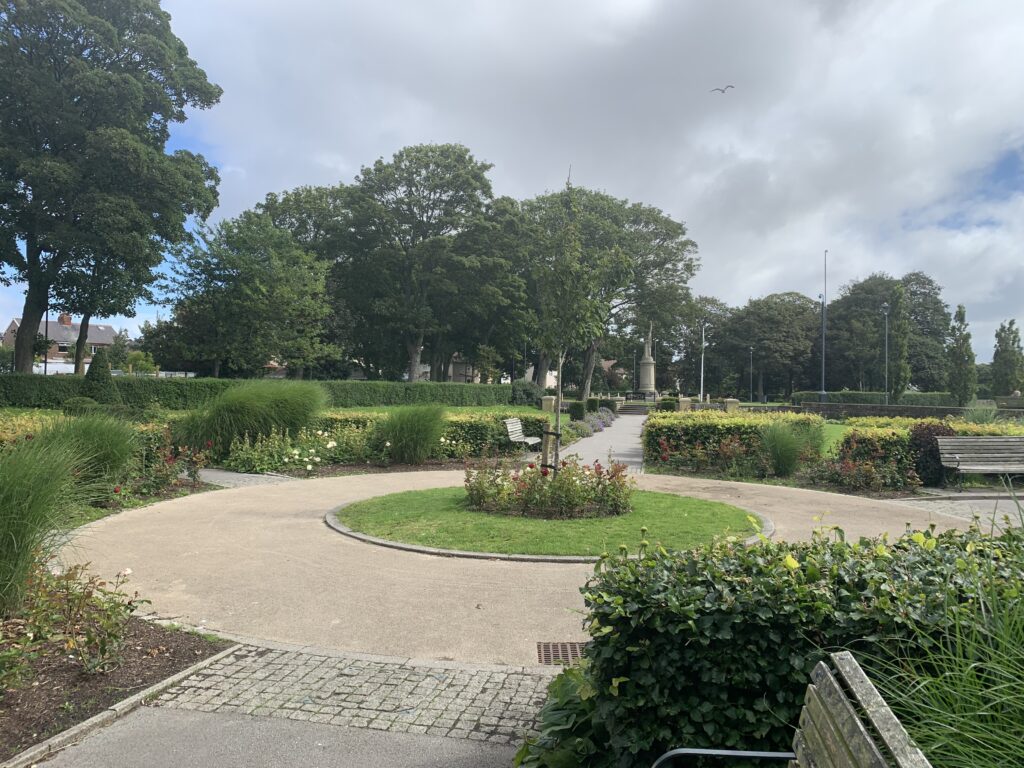
The project was made possible with two grant funds. A National Lottery Community Spaces Grant of £50,000 and an investment of £25,000 from United Utilities. At its best in the 1930’s the original garden had 2000 roses. However the passing years had seen the beds become old and the plants decline. Eventually many of them had been removed and the beds grassed over.
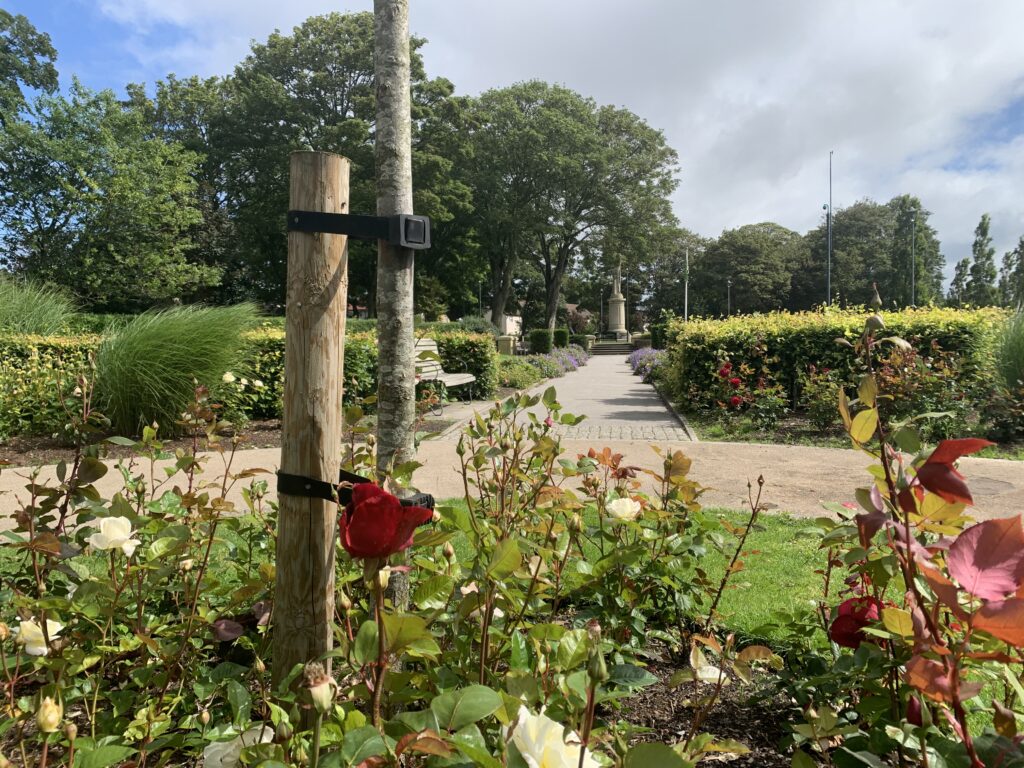
The new garden is on the old site and includes many of the original features including steps, walls and paths. The modern planting scheme includes new planting and plenty of seats. It’s a beautiful and tranquil spot for everyone to enjoy.
Stream, Rockery and Duck Pond
The stream, rockery and pond are a manmade feature. A sign on the gate tells us… Back in the 1930’s they were described as ‘all very natural in appearance and suggestive of a mountain stream flowing to a tarn’.

However you’d like to describe it, this is a lovely spot! A decorative iron fence encloses the area. Ducks look after their ducklings and seagulls wait to be fed. There’s poolside planting and no doubt plenty of wildlife!
Another Entrance
During refurbishment of the park another new entrance was formed. Find it adjacent to the main entrance of Highbury Stadium, Fleetwood Football Club’s ground.

As part of the restoration, invasive vegetation was removed and replaced with a variety of planting. They provide year round greenery and increase the park’s biodiversity.

On the day when we popped into the park, the herbaceous border was at its best and looked particularly stunning.
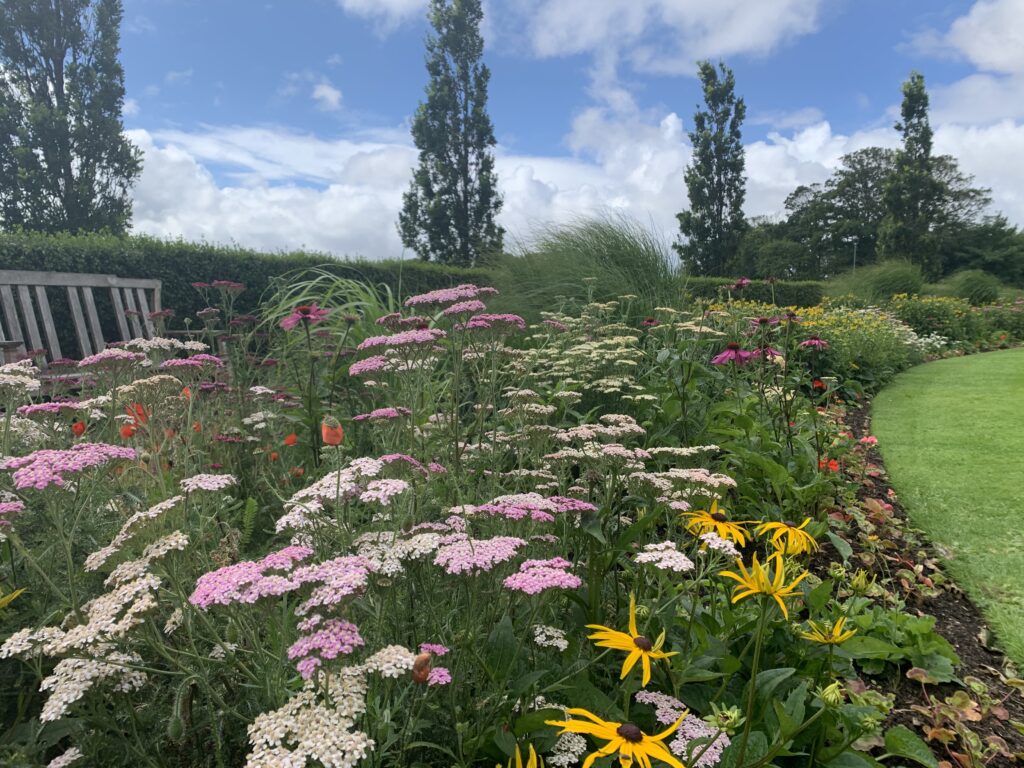
And look at this for a well kept lawn! Looking for ways to make your garden lawn look like this?

History of Memorial Park
Renowned town planner Sir Patrick Abercrombie designed and built Memorial Park in 1925.
The entire grounds were created in commemoration of the First World War. That’s unlike most conventional architectural memorials, and makes it unique
Did you know? There are only four listed war memorial parks and gardens in the UK. Memorial Park is one of them!

This British Pathe film clip shows Admiral Sir William Goodenough unveiling the War Memorial in 1927.

This hand coloured postcard of scenes of Memorial Park dates back to the 1920’s.

Restoration of Memorial Park
Wyre Council secured a grant of £2.4m from the Heritage Lottery Fund in July 2013. The funding paid for a comprehensive restoration of the Grade II listed park.
Work started in early 2014 with the restoration of the park’s pavilion, now a community hub.
It also included creation of a five year programme of community activities, to celebrate its heritage and the unique history of the town.
Restoration at the park includes:
– Restore and improve the memorial and surrounding
– Restore Wolsley entrance
– Create a pavilion and demonstration garden for community use
– Restore pond and stream and create more public space
– Improve Percy Street garden
– Create a multi-use games area and restore two tennis courts
– Restore Warrenhurst entrance and Remembrance Avenue
– Walls at the bowling greens to be restored
– Restore Nelson Road entrance and create a new path
– Improve Highbury Avenue entrance and introduce arrival point
– Formalise woodland walk and link to restored rockery and pond
– Improve Welbeck Avenue entrance and create arrival point
Soldier and Sailor Back in Place
The entrance gates of the Park originally carried plaques of a soldier and sailor. However the sailor had disappeared some years ago. The sailor symbolised Fleetwood’s naval role in the First World War and heavy loss endured by the community as a result of the many trawlers lost at sea.
Fortunately, local resident John Dales had detailed photographs of the plaque. From them it could be remodelled and returned to its rightful position.
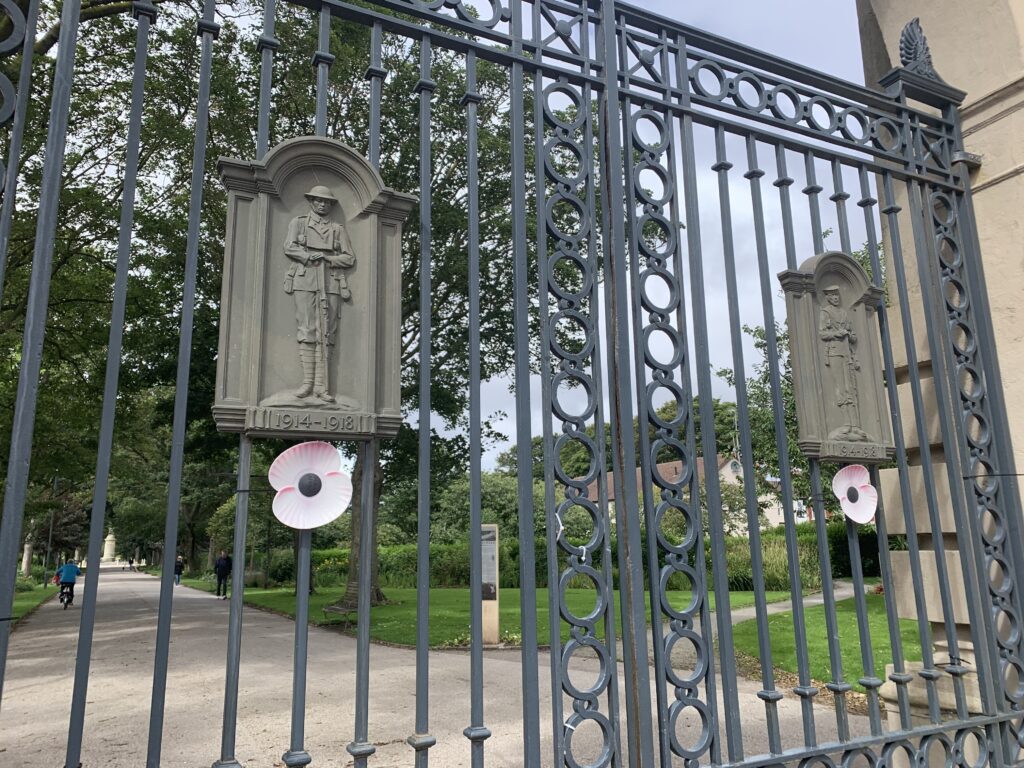
The sailor plaque is vital to understanding the war memorial and a symbol of everything the park stands for. Together they mean so much to people and are a poignant reminder of what the park is all about.
Lost at Sea
Eric Curbishley is a local military researcher and friend of Visit Fylde Coast. He provided us with information to share about this and other local war memorials.
In October 2017, Eric contacted us with some information he’d found out about Fleetwood War Memorial. He says: “At the end of 2016 I started researching Fleetwood War Memorial (Second World War only). I couldn’t find one of the names on the memorial on the Commonwealth War Graves Commission (CWGC) database. Further research revealed that he was one of a Fleetwood crew of 12 men working on a trawler named “Lowdock” (below).

In the North Sea on 19th March 1940, during the hours of darkness, a Royal Navy anti-submarine vessel rammed it, and it sank. Eleven of these men died with just one survivor.
Why are they missing?
“I contacted the CWGC to ask why these men are not commemorated. They replied that they did not meet their criteria. I have a copy of the Criteria for Civilian Deaths in WW2, which the CWGC are supposed to follow. In my opinion they have made a mistake.
“Since January this year (2017) there have been numerous e-mails between myself and the CWGC in my efforts to get them to amend their original decision not to commemorate but they have refused to change their minds.
“The owners of the trawler sued the commander of the Royal Navy vessel and I have recently applied under the Freedom of Information Act for a copy of the court case documents relating to this incident.“
Green Heritage Site
The Grade II listed Memorial Park holds prestigious Green Heritage Site accreditation. The award was made in 2016. Given in recognition of historical importance along with high standards of care and upkeep.

Keep Britain Tidy and Historic England award Green Heritage Site status. It’s only given to historical sites that are at least 30 years old. They must demonstrate excellence in heritage conservation. And must also have received a Green Flag Award. Both mark them as the best parks and green spaces in the country.
Wyre Council recently restored Memorial Park to its original 1920s landscape thanks to a £2.4m grant from the Heritage Lottery and Big Lottery Funds. The entire grounds were created in commemoration of the First World War and that makes Memorial Park unique. That’s different to most conventional architectural memorials. This park is one of only a handful of listed war memorial parks and gardens in the country.
Grade II Listed
In October 2011 English Heritage made Memorial Park a Grade II Listed park. It was also added to the Register of Parks and Gardens of Special Historic Interest in England.
This means that it’s not just special to local people and the community. It also has national recognition for its importance, and increased protection for the future.
While you’re here…
Have a look at the homepage of the Visit Fleetwood website for more of the latest updates.
Love the Fylde Coast? Sign up for your weekly email newsletter. Packed full of interesting things it arrives in your inbox all 52 weeks of the year.
Join us on Facebook at our Visit Fylde Coast Facebook Group
Don’t forget to follow us on Twitter @visitFyldeCoast

We Need Your Help
We Need Your Help




The library was in fact on Poulton road, surrounded by a hedge to the front and numerous trees.
It was a small sub library to the main library on Lord street.
My mum says she used to visit a library when she was a young girl, she thinks between 1943-45 or possibly a little later, on the Fleetwood Memorial Park. No one else can seem to remember it. Could you confirm if there ever was a library as she’s beginning to wonder if it was a dream
Thank you
Janet Walsh
Hi
Please can you tell me how to apply for trade space at your events.
Kind regards susan.
You would need to contact Wyre Council