


Fleetwood is on a peninsula of land between the Irish Sea and River Wyre. Rossall Point seafront is the spot where the north/south coastline begins to turn east/west (ish) at the golf course.
It’s an interesting spot – wild and windswept and quite natural. A great spot for anyone who loves a natural coastline, it’s also where you’ll find Rossall Tower.

Walk the Coast to Rossall Point Seafront
There’s a coastal footpath, right against the edge of the beach, all along the whole of the Fylde Coast. You can walk around Rossall Point seafront by approaching it from the new sea wall in the south or from the ‘seasidey’ seafront at Marine Beach.
Approaching from Cleveleys end
Cleveleys seafront ends near Rossall School. Through the Five Bar Gate from Rossall Promenade there’s a section of old concrete revetments, known locally as the ‘tank traps’.

Next up is the glorious, brand new Rossall Coastal Defence Scheme. One mile of new sea wall, opened in 2018 at a cost of £64 million, it protects the area against coastal flooding and erosion. It’s also an amazing public space – perfect for walking, cycling and enjoying the beach.
A natural coastline
The new Rossall sea wall ends at Fleetwood Golf Club. Here the landscape becomes far more natural. It’s actually a Site of Special Scientific Interest and, would you believe, where Morecambe Bay begins. The civil engineering of the man-made sea defence changes here to a low wall against a footpath.
FREE Newsletter
FREE Newsletter

In May 2020 we walked this section of seafront from the Chatsworth access. Heading north we walk around Rossall Point, and enjoy the views along the seafront. It’s busier than it might otherwise be because it’s made at the time when outdoor exercise was permitted after the first Covid lockdown. This video ends at Rossall Tower.
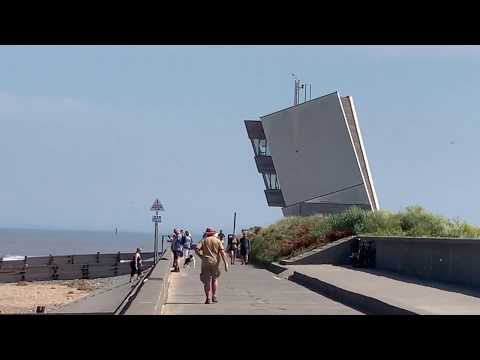
Enjoyed this video? Why don’t you subscribe to the Visit Fylde Coast YouTube channel, for loads more great content!
After seeing this page Winifred emailed us. She says “So enjoy all the videos but the Rossall Point ones evoke such happy memories. Grandparents moved to the area just pre-war. As child I was often there and used to walk down Larkholme Lane to the seashore and enjoy. There were no houses then, just the sound, presumably of larks. One time remember going to see a crashed plane some way just behind grandparents house. Thanks for the videos“
Approaching from Fleetwood
You can get onto the outer promenade coastal footpath at any point along Fleetwood seafront. The nearest access for Rossall Point seafront at the northern end is probably via the car park at the Log Cabin, opposite the Sea Cadets.

If you’re feeling more energetic, why not walk to Rossall Point seafront from the Boating Lakes or Marine Beach? In the next video we walked just a short distance to approach Rossall Tower from this general direction –
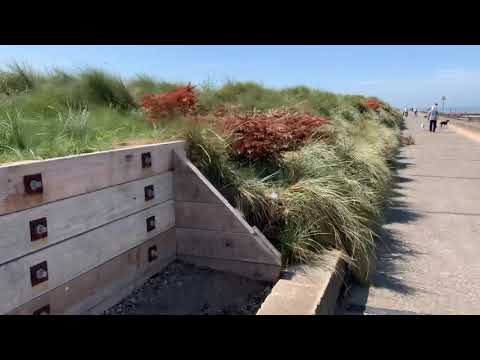
Enjoyed this video? Why don’t you subscribe to the Visit Fylde Coast YouTube channel, for loads more great content!
Enjoy Rossall Point Seafront
At Rossall Point seafront, the coastal footpath butts up to sand dunes and natural sea protection to the landward side. There’s a short wall against the beach – it’s ideal to sit on and rest when the walking and biking gets too much!

On this section of North West UK coast, the prevailing weather generally comes from the south west/west. The head-on, prevailing weather batters the new sea defence at Rossall. But at Rossall Point, the land changes direction relative to the direction of the waves. You can see the bend of the coastline in the distance in the next photos.
Beyond the Point around the Tower, the waves glance along the coast so cause less erosion. Big sea defences like those used just a short distance away aren’t necessary here. But the shoreline still needs protecting and that’s what the Wyre Beach Management Scheme will do. Toe protection and a series of groynes will be installed along the length of the coastline from the Rossall Coastal Defence Scheme, completed in 2018. It continues around the tip of Rossall Point, past the Tower, to midpoint of the large boating lake.


Do you love the sounds of the sea?
We’ve got a whole YouTube playlist featuring nothing more than waves lapping against the shore. This one is filmed at Rossall Point – enjoy!

Enjoyed this video? Why don’t you subscribe to the Visit Fylde Coast YouTube channel, for loads more great content!
A natural environment
It’s not completely isolated, but mostly used by local people and those in the know. It’s about as natural as you’ll get, without going to a completely remote coastline.
The small dune systems against the path are home to sea holly and dune grass and other native coastal plants. Their extremely long root systems make them specially adapted to live in the dry sand. Enabling them to search down into the depths of the sand to find the moisture they need to survive. Of course they also attract the butterflies, insects and wildlife which thrive in this salty habitat. Listen on a warm day, can you hear the sound of crickets?

A home for wildlife
There’s a stile just at the end of the new sea wall adjacent to Fleetwood Golf Course. This is where Morecambe Bay officially starts/ends, along with the Site of Special Scientific Interest (SSSI).

The SSSI includes the whole of the Wyre river estuary and beaches at Fleetwood and covers the area to the far northern side of Morecambe Bay.
The Wyre Estuary is an integral part of Morecambe Bay, one of the two largest areas of intertidal estuarine flats in Britain (the other being the Wash). The combined Wyre/Morecambe Bay estuary is of international significance for wintering wading birds and national significance for wintering wildfowl. The Wyre estuary also supports many important species of wild plants.

The huge sandbanks are a perfect home for birds and wildlife. They feed on the worms and invertebrates that live in the sand and get washed up by the sea.
Fleetwood is home to enormous numbers of wading and sea birds. Some live here all year round, some come here to breed in summer, and others come to feed and overwinter.
Please don’t disturb the birds
The birds do look cute when they run along the water’s edge. But they’re trying to conserve vital energy and warmth while the tide’s in and their feeding grounds are covered with water. Please don’t disturb them or let your dog run at them. When they fly away they waste energy that’s difficult to replace, especially in winter when food is more scarce.

Marine life is rich on the coastline, and you’ll often see the black heads and puppy dog eyes of swimming seals. Maybe you’ll catch an odd one having a rest on the shore. You need to be quick and alert to them. They surface for minutes and bob up and down, looking similar to a floating seagull. Then they’re gone, back under the water, hunting for fish.
The Fylde Coast is also home to porpoise, and there are groups of people who scan the shores looking for sightings of them swimming. You’re probably more likely to see (or smell!) an odd dead one, washed onto shore.
Rossall Coastwatch Tower at Rossall Point Seafront
Not quite exactly at Rossall Point is the Coastwatch Tower. It’s where volunteers watch over the water from their high vantage point, keeping an eye out for mariners and beach users in distress.

Pleasure boats, fishermen, canoes, kite surfers and others enjoy lots of sports here. They can also easily get into trouble in the rapidly changing conditions on this coastline.
This is the second Coastwatch Tower, rebuilt in recent years. The old tower was demolished in January 2012 and this brand new replacement built. It has different levels for different uses, including:
- a lookout point for the Coastwatch volunteers,
- an open roof – open to the public and where you can take in the view, and
- education facilities which can be used by the general public.
The base of the old Coastwatch Tower is now a block of Danfo public toilets.
Keep Safe at Rossall Point Seafront
The Fleetwood coastline around Rossall Point Seafront is dangerous – just like the more northerly Morecambe Bay. That’s the one renowned for shifting quick sands, and the ill fated Chinese Cocklers. On 5 February 2004 at least 21 Chinese illegal immigrant labourers drowned on the incoming tide, while picking cockles off the Lancashire/Cumbrian coast.
Don’t let that happen to you.
Please take care, know the tide times before you go walking and don’t risk leaving the shore edge on an incoming tide.
The whole of the Fylde Coast can be dangerous to beach users. When you venture out there you should always have a knowledge of tide times, an awareness of where the sea is and when it starts to come in. Ideally you should also let someone know before you go walking on the beach.
Did you know? The incoming tide runs faster here than a galloping horse – so you’ve got no chance of outrunning it.
Huge islands form rapidly when sea water fills the gullies around sandbanks. It cuts walkers off and leaves them stranded. The beaches move each day with the movement of the tides – exaggerated by the strong winds on the coast. You can’t rely on the landscape looking the same for two days on the run.
While you’re here…
Go to the homepage of the Visit Fleetwood website for the latest updates.
Love the Fylde Coast? Sign up for your email newsletter. Packed full of interesting things it arrives in your inbox all 52 weeks of the year.
Join us on Facebook at our Visit Fylde Coast Facebook Group and follow us on Twitter @visitFyldeCoast
Plus hundreds of videos to watch on our YouTube channel – from all over the Fylde Coast!
Booking a stay? Pick a safe, clean and legal place to stay, at the very best price. Book with the Visit Fylde Coast and StayBlackpool guide.

We Need Your Help
We Need Your Help


