Along with landowner Sir Peter Hesketh Fleetwood, Decimus Burton was the architect responsible for laying out the new, planned town of Fleetwood. He had a long and illustrious career, designing many other important and well known places and buildings. Decimus was one of the foremost English architects and landscapers of the 19th century.
So who was Decimus Burton?
Decimus Burton FRS FRSA FSA FRIBA was born in Bloomsbury, London, on 30 September 1800 (and died on 14 December 1881). The tenth child of Elizabeth Westley and James Burton, a pre-eminent London property developer. Hence why he was named Decimus!
His very comfortable, privileged start in life enabled him to attend the Royal Academy Schools and benefit from the direction of excellent teachers, becoming one of the foremost English architects and landscapers of the 19th century. Among other things, he was a founding fellow and vice-president of the Royal Institute of British Architects (RIBA), establishing his own architectural practice in 1821. From 1840 he was architect to the Royal Botanic Society.

The architect of Fleetwood was an important member of London high society during the Georgian and Regency eras. He was a close friend of Princess Victoria (later to be Queen Victoria) the Duchess of Kent, the 6th Duke of Devonshire and Sir Humphry Davy – designer of the safety lamp.
Burton was also a prolific architect, designing many well-known landmarks in London. Including the Wellington Arch, the Palm House at Kew Gardens and Clarence Terrace. Cornwall Terrace, and Grove House in Regent’s Park. Hyde Park, St James’s Park, Regent’s Park and London Zoo were also his work. He also designed the town of Royal Tunbridge Wells and the seaside towns of St. Leonards on Sea, Folkestone, and Fleetwood. One of his pieces was the enclosure of the forecourt of Buckingham Palace, from which he had Nash’s Marble Arch moved.
Moving as he did in high society, one of Burton’s friends was Sir Peter Hesketh Fleetwood. He worked very closely with Sir Peter, the founder of Fleetwood, in the growth of the new town.
Decimus Burton – Designer of Fleetwood
It was way back in 1835 when the building of Fleetwood began.
Decimus Burton was hired by Sir Peter Hesketh Fleetwood – then Squire of Rossall – to develop his new town. Sir Peter had been inspired by a visit to St Leonard’s on Sea and wanted to build something similar here in the Fylde. The Squire had actually planned for his new town to be at Thornton and even laid a foundation stone there for a new railway terminus. But then he decided it wasn’t near enough to the coast.

Wheel and spokes
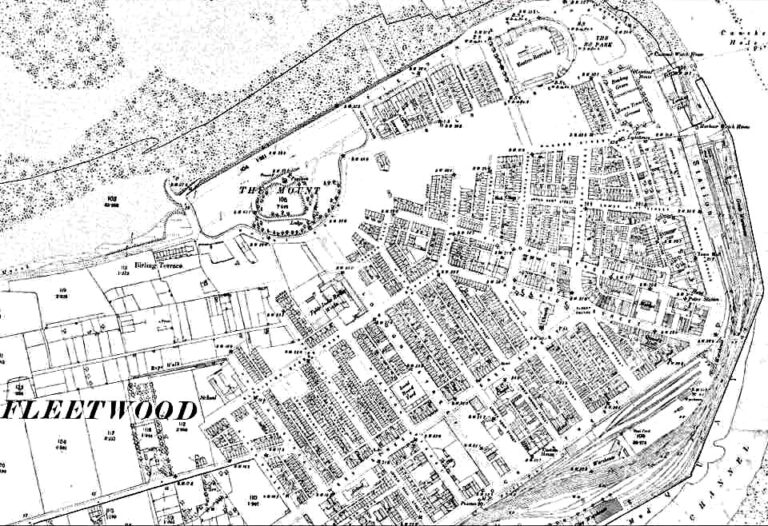
And so Decimus Burton had the honour of planning out Fleetwood, what would be the UK’s first “new town”. Based around Tup Hill as the Mount was then known, he marked out London Street first.
Decimus marked out the basic street plan using a plough borrowed from Robert Banton, the farmer of East Warren Farm. He’d planned the town to resemble a wheel, with the streets being spokes from the hub of The Mount.
The buildings that Decimus Burton designed
Look around Fleetwood today and you can still see his work throughout the town.
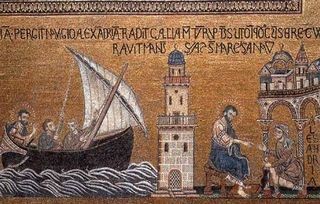
Sir Peter designed the layout of the town itself and many of its beautiful buildings. Including the Lower or Beach lighthouse, based on the Pharos Lighthouse in Alexandria in Egypt.
St. Peter’s Church, the Pharos Lighthouse, The North Euston Hotel and The Euston Gardens were his work. As was Queens Terrace, and the Customs House, now Fleetwood Museum.
Why don’t you – visit Fleetwood Museum? See the past come to life and find out much more about the town’s architect.

The entrance building to the Mount Gardens was originally Decimus Burton’s office.
- What was the Victoria Hotel at 40-46 Dock Street is now a Grade 2 Listed Building, described as “built at least under Decimus Burton’s supervision and probably to his design”.
- The 3-storey Bonded Warehouses at Dock Street were purportedly designed by Decimus Burton, built in 1845 to store wine, spirits, tea and tobacco until the duty had been paid.
- 114 to 118 Dock Street was added to the Royal Hotel at Dock Street by Decimus, to house his own offices and accommodation. Another Grade 2 Listed Building, the 3 bay central pedimented part was built as the offices of the Preston and Wyre Railway.
Explore with Heritage Open Days
Each year in September, historic buildings all over the UK throw open their doors to provide free admission during Heritage Open Days. It’s a great chance to go exploring – many of them only open at this one time.
While you’re here…
Go to the homepage of the Visit Fleetwood website for the latest updates.
Love the Fylde Coast? Sign up for your email newsletter. Packed full of interesting things it arrives in your inbox all 52 weeks of the year.
Join us on Facebook at our Visit Fylde Coast Facebook Group and follow us on Twitter @visitFyldeCoast
Plus hundreds of videos to watch on our YouTube channel – from all over the Fylde Coast!
Booking a stay? Pick a safe, clean and legal place to stay, at the very best price. Book with the Visit Fylde Coast and StayBlackpool guide.

We Need Your Help
We Need Your Help